
The standard gift card size is 3.375 inches wide by 2.125 inches tall—basically a credit card’s twin. This thickness of 0.030 inches uses durable PVC material that withstands regular wallet use.
Why these exact dimensions? They fit snugly in #6 business envelopes for mailing, align with existing die-cutting templates to reduce production costs, and sit comfortably alongside your driver’s license. Understanding this measurement informs smarter design choices and manufacturing efficiency.
What Are the Standard Gift Card Dimensions?
Ever wondered why gift cards fit so perfectly in your wallet? The answer lies in standard gift card dimensions that I’ll break down for you.
Most gift cards measure 3.375 inches wide and 2.125 inches tall, matching your typical credit card size. This standardization means they’ll slip right alongside your driver’s license and bank cards. The thickness clocks in at 0.030 inches, making them thin enough for any wallet pocket.
Standard gift cards measure 3.375 inches wide by 2.125 inches tall, fitting perfectly alongside credit cards in your wallet.
These gift card dimensions typically use PVC material, which provides durability and that satisfying card feel. The measurements align with envelope sizing and USPS mailing requirements, making them suitable for sending through the mail.
However, some brands deviate from these standard measurements. I’d recommend checking with your specific gift card provider to verify compliance. Knowing these dimensions helps with design planning and wallet compatibility.
Why These Dimensions Cut Costs and Speed Up Production
When you stick with those standard 3.375 by 2.125 inch dimensions, your production costs drop significantly because printing facilities already have cutting dies and templates ready to use, which saves time and setup fees. You’ll also notice that paper sheets cut far more efficiently at these measurements, meaning less waste ends up discarded and more cards make it into actual boxes, which directly improves your bottom line. Plus, standardized workflows mean your team moves through production faster, fewer problems occur along the way, and you’re not customizing processes with every single order.
Efficient Paper Utilization
Why does sticking with standard gift card dimensions save you money and time? Standardization works to your advantage. When you use the industry-standard 3.375 by 2.125 inches, you gain a significant benefit: efficient paper utilization. Manufacturers have already optimized their cutting patterns around these exact measurements, so there’s virtually zero waste when they’re die-cutting your cards from large sheets. You’re not paying for scrap material that ends up in the recycling bin. Plus, since these dimensions fit perfectly into standard production workflows—from lamination to packaging—you’re getting faster turnaround times without extra handling. Your printer’s already got the tooling dialed in, which means lower setup costs and speedier production. Aligning with what works delivers measurable savings.
Reduced Printing Overheads
How much could you save by just sticking with what printers already know? When you use the standard 3.375 by 2.125 inch size, you’re basically giving printers a gift. They’ve optimized their equipment, templates, and workflows around these exact dimensions. That means less setup time, fewer mistakes, and significant efficiency gains.
Here’s the benefit: printers can fit more cards per sheet with standard sizes, which cuts material waste dramatically. They’re also running these jobs constantly, so they’ve got the process down to a science. You’ll notice lower per-card costs because they’re not recalibrating machines or adjusting templates just for you. Edge-to-edge artwork on standard cards? That speeds up trimming and reduces post-processing delays. Basically, you’re working with their system instead of against it, which saves everyone time and money.
Standardized Production Workflows
The logic behind those standard 3.375 by 2.125 inch dimensions isn’t just about fitting cards in your wallet—it’s about fitting perfectly into printers’ entire production systems. When I work with standard gift card size specifications, I’m tapping into equipment that’s already calibrated for these exact measurements. Manufacturers have spent years perfecting their workflows around this standard gift card size, which means fewer setup adjustments and faster turnaround times.
The practical advantage? Full-bleed printing capabilities and those necessary safe printing areas work without constant recalibration. PVC material cuts consistently, dies align accurately, and production lines operate smoothly. You’re not paying extra for custom adjustments or dealing with frustrating delays. Standardization removes bottlenecks effectively. When everyone speaks the same dimensional language, production becomes efficient, predictable, and cost-effective.
Bleed, Safe Zones, and Print-Ready File Specifications
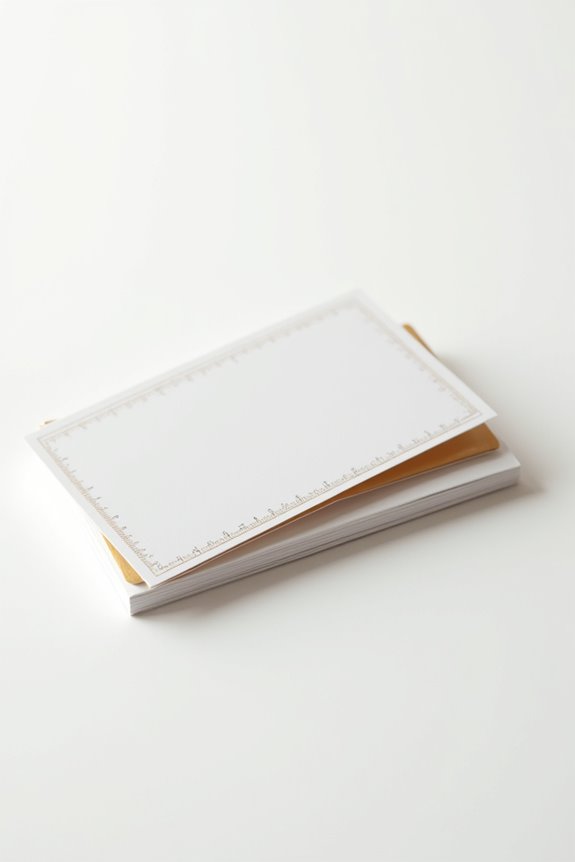
When creating your print-ready gift card file, consider bleed and safe zones as essential technical requirements for avoiding production issues. The bleed area extends to 3.61 x 2.11 inches, which means your artwork should stretch all the way to that edge so no white strips appear after trimming. Your safe zone sits at 3.36 x 1.86 inches and is where all your important content—text, logos, and other key elements—must be positioned. Adhering to these specifications before sending your file to print directly impacts the final quality of your cards.
Bleed Area Requirements
Since you’re designing a gift card, you’ll want to know about bleed areas—they’re basically your safety net against those awkward white edges that show up after cutting. I’m talking about extending your design slightly beyond the finished card dimensions, and a standard bleed area typically runs 0.125 inches (3 mm) on all sides. Think of it like giving your design a little breathing room. Without this buffer zone, printing imperfections and cutting variations can leave visible white borders that look unfinished. When you’re preparing files, you’ll extend your 3.375 x 2.125 inch card to 3.625 x 2.375 inches total. It sounds like a small detail, but this bleed requirement is the difference between a professional-looking card and one that appears amateurish.
Safe Printing Zones
How do you make sure your design actually looks good when it prints? You need to nail your safe printing zones, and here’s how.
Your gift card dimensions are 3.375 x 2.125 inches finished, but here’s what matters: you need a safe area of 3.36 x 1.86 inches for text and critical design elements. That keeps everything visible and crisp. Beyond that sits your bleed area, extending 0.125 inches on all sides. This prevents those annoying white edges from showing up.
For print-ready files, you’re looking at 3.61 x 2.11 inches with 300 DPI resolution. That’s your full-bleed specification. The bleed accounts for trimming tolerances, so your designs stay protected. Stick within these zones, and you’ll get professional results every time.
Design Tools and Templates to Get Started Quickly

Why start from scratch when you have templates and design tools ready to go? Using design tools makes creating professional gift cards easier. You’ll find options that handle the standard 3.375 by 2.125 inch dimensions automatically, which saves you from measuring mistakes.
| Design Tool | Best For |
|---|---|
| Canva | Quick, beginner-friendly designs |
| Adobe Express | Brand consistency work |
| Illustrator | Custom, detailed artwork |
| Template libraries | Ready-made layouts |
These design tools come loaded with templates that keep your safe printing zones protected. You’ll get clear guides for logo placement, text spacing, and edge-to-edge designs. Most platforms let you preview how your foil stamping or gloss finishes look before printing. Start with templates since they’re built by designers who understand gift card specifications.
Maximize Impact: How to Use Every Inch of Card Space
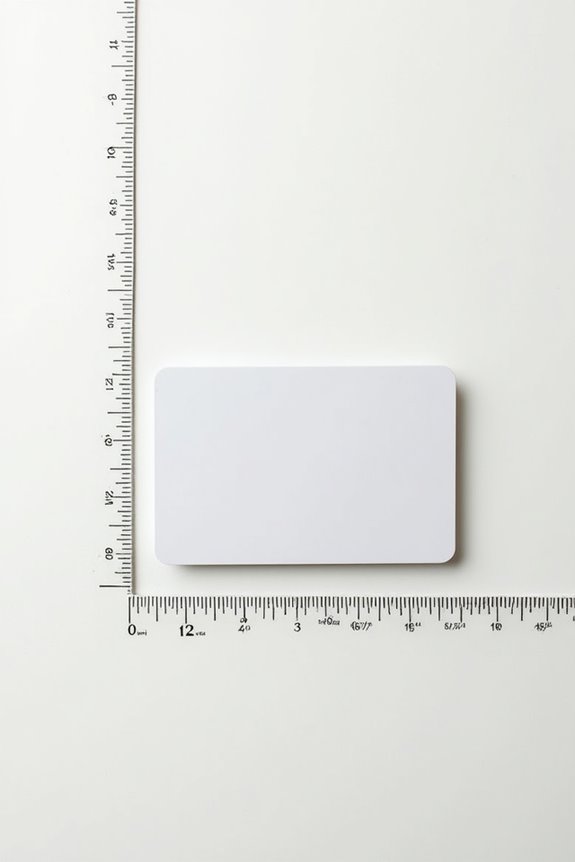
Every millimeter on your gift card’s 3.375 by 2.125 inches of real estate matters—and I mean that literally. I’d suggest pushing your artwork all the way to the edges with subtle shading that creates a raised-edge illusion. This edge-to-edge approach keeps your gift card design visually engaging and prevents that awkward blank-space feeling.
Consider wrapping your design from front to back. A continuous motif—maybe your brand’s signature element—encourages people to flip the card and discover what’s on the other side. You’re creating two distinct touch points instead of one.
Don’t overlook your front-side messaging. Make “Gift Card” bold and unmissable, and if you’re showing an amount, let it command attention through your brand colors. Every inch counts when you’re competing for wallet real estate.
Foil Stamping, Glossy, and Uncoated Finishes Explained
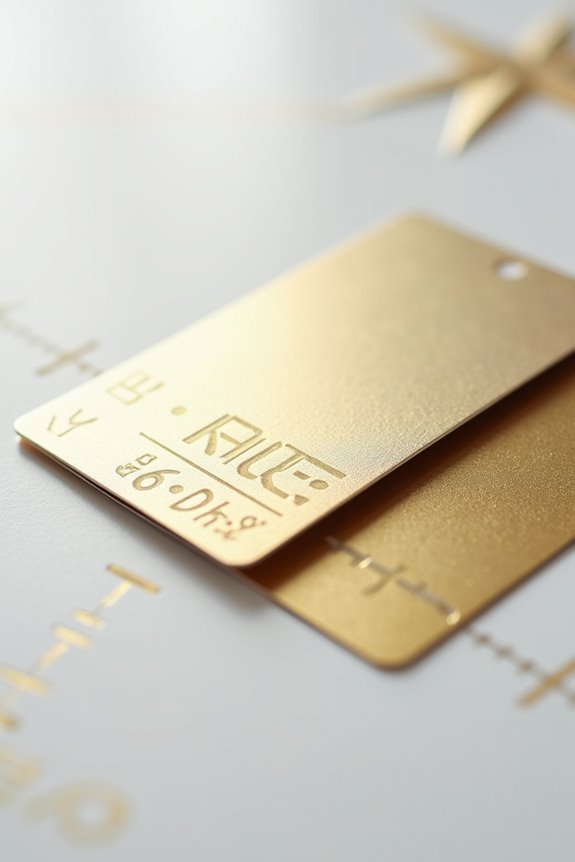
I’ve found that choosing your gift card’s finish really shapes how people perceive its value, so let me break down the three main players: foil stamping uses a custom metal die to transfer shiny metallic accents that create a raised-like impression, glossy finishes deliver that strong shine which catches light well, and uncoated finishes offer a natural, tactile feel that lets your logo and branding stand out. Each option has distinct advantages—foil stamping elevates perceived quality through metallic highlights, glossy adds visual pop with its reflective surface, while uncoated gives you that honest, premium vibe without the shine. Your pick affects not just how the card looks under store lights or in someone’s wallet, but also its durability and overall brand impression.
Foil Stamping Premium Effects
How do you make a gift card look like it costs more than it does? Foil stamping’s your answer, friend. I’m talking about applying metallic foil accents using a custom metal die, creating that reflective finish that catches light. You can pair foil stamping with embossing or debossing to add texture and visual hierarchy, making your card feel premium. The metallic shine elevates your branding beyond standard finishes. Sure, foil stamping costs more and takes longer than glossy or uncoated options, but the payoff works. Your gift card becomes distinctive and on-brand. When you’re giving premium gifts, foil stamping separates you from the crowd.
Glossy Finish Visual Impact
Now that you’ve got the premium shimmer of foil stamping down, let’s talk about the finishes that make your entire card shine—literally. Glossy finishes deliver strong visual impact. They provide high shine and vivid colors that grab attention immediately. Your card’s design stands out prominently from the surface, creating favorable first impressions.
| Finish Type | Visual Effect | Best For | Durability |
|---|---|---|---|
| Glossy | High shine, vivid colors | Premium brands | Very durable |
| Uncoated | Natural, tactile feel | Minimalist designs | Standard wear |
| 4/4 Coverage | Full color both sides | Maximum impact | Excellent |
| 4/0 Coverage | Single-side color | Cost-effective | Good |
I’ll be honest though—glossy finishes reflect light everywhere, which means they show fingerprints. You’re balancing that visual impact with practical maintenance. When your brand messaging demands vibrancy and visual pop, glossy delivers the results you need.
Uncoated Natural Brand Expression
Most gift cards you’ve seen probably had that slick, shiny feel, but uncoated finishes take you in the opposite direction—and that’s actually useful for certain brands. When you go uncoated, you’re choosing authenticity over flash. Your customers get that natural paper texture, which feels more honest and approachable. It’s the tactile equivalent of a firm handshake.
Here’s what matters: uncoated cards invite interaction. People can actually write on them with pens or markers without that glossy resistance. You’re basically saying, “this card is for you to personalize.” That creates connection.
You can also add foil stamping to uncoated stock for premium contrast while keeping that natural feel intact. It’s the best of both worlds—metallic highlights that don’t scream “corporate.” Your brand feels warm, real, and distinctly yours.
Communicate Value Through Smart Design Choices
Why does a gift card with edge-to-edge artwork feel more valuable than one with empty space around it? Because your design choices tell a story about what you’re offering. When I fill that 3.375-by-2.125-inch card completely, I’m communicating that this gift matters. Bold brand colors that capture attention immediately, while clear messaging stating “Gift Card” and the amount removes any guessing. I integrate my logo seamlessly into the design, making it unmistakably mine. Shading creates a raised-edge illusion that makes the card feel premium and tangible. Wrap-around designs that flow front-to-back encourage people to explore every inch. These smart choices communicate confidence in your offering and invite recipients into an experience they’ll value.
Keep Gift Card Branding Consistent Front and Back
Your design choices on the front tell half the story—but the back is where you cement your brand in someone’s mind. Consistent gift card branding across both sides creates a card that functions as a walking advertisement for your business.
| Design Element | Front Purpose | Back Purpose |
|---|---|---|
| Logo | Immediate recognition | Reinforced identity |
| Color palette | Visual appeal | Brand consistency |
| Typography | Clear hierarchy | Message clarity |
| Value display | Transaction info | Amount confirmation |
| Brand imagery | Customer connection | Portable promotion |
When you match your marketing colors, fonts, and logos front-to-back, you’re not just creating a card—you’re building familiarity. Your customers carry these cards everywhere, and that consistency means they’re thinking about you regularly. Something so small becomes powerful when everything aligns properly.
Wrap-Around Imagery That Makes Gift Cards Memorable

Wrap-around imagery applies a continuous design across a standard 3.375 x 2.125 inch card, flowing from front to back. This approach creates visual storytelling that invites people to flip the card over and discover additional content.
With wrap-around imagery, you double your design real estate without increasing the card’s physical size. The key is managing your visuals so they bleed properly across edges and avoid awkward cuts during production. Bold, high-contrast imagery maintains legibility whether your card sits flat, tilted, or against various backgrounds.
This unified approach integrates your logo, colors, and tagline throughout, reinforcing your brand identity. The result: a gift card that stands out and feels intentional, rather than like an afterthought.
When and Why to Abandon Standard Dimensions

When does sticking with standard dimensions actually work against you? I’d say when your brand deserves something bolder. Non-standard dimensions let you stand out on the shelf and fit your wallet like a dream. Maybe you’re designing a coffee cup shape or beer pint card—that’s when abandoning the typical 3.375″ x 2.125″ makes total sense.
However, here’s the trade-off I’ve learned: custom sizes demand special die-cutting, rare paper stock, and longer timelines that bump up production costs. USPS mailing rules get trickier too, and envelopes become a headache. But if brand differentiation and wrap-around design opportunities align with your marketing campaign, those challenges dissolve. You’re investing in something with real impact, something that tells your audience you’re part of their world.
Material, Thickness, and Durability: What Actually Matters
So that’s the point about gift cards that most people don’t think about: the actual card in your hand matters way more than you’d expect. Here’s the thing: PVC is what we’re working with for most cards, and it’s a solid choice. The thickness—we’re talking 30 mil or 0.030 inches—that’s your durability baseline. Thicker isn’t always better, but it prevents that flimsy feeling that screams cheap. What really gets you is the finishing touches: foil stamping and gloss coatings elevate a basic card into something that feels premium. Material quality and those finishing choices? They’re what determine if your gift card survives wallet wear or falls apart after one swipe. That’s where you’ll notice the difference between cards that feel good and ones that disappoint.
Mailing Your Gift Cards: Envelope Compatibility and USPS Rules
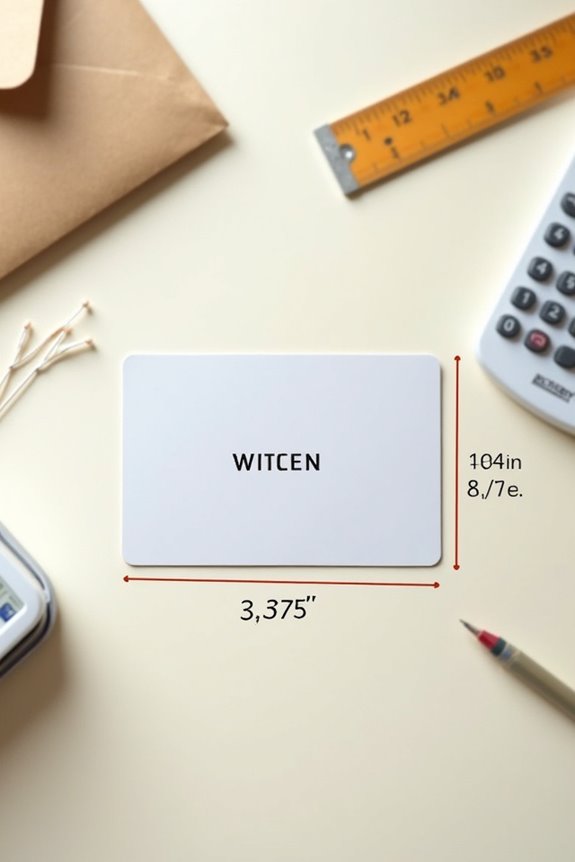
How do you get a gift card from your hands into someone else’s without it getting bent, creased, or lost in the mail? Standard gift card sizing—3.375 inches by 2.125 inches—fits perfectly into a #6 business envelope, which measures 3.625 by 6.5 inches. That extra quarter-inch of space prevents crushing during postal handling. For maximum protection, place your card in a rigid mailer or between two pieces of cardboard. The USPS treats gift cards as standard mail, so you’re looking at regular postage rates. Keep those measurements in mind when designing custom cards too. Envelope compatibility matters more than you’d think, and it’s the difference between a pristine present and one that looks like it survived a wrestling match.
Design to Order: Sourcing Custom and Standard Gift Cards
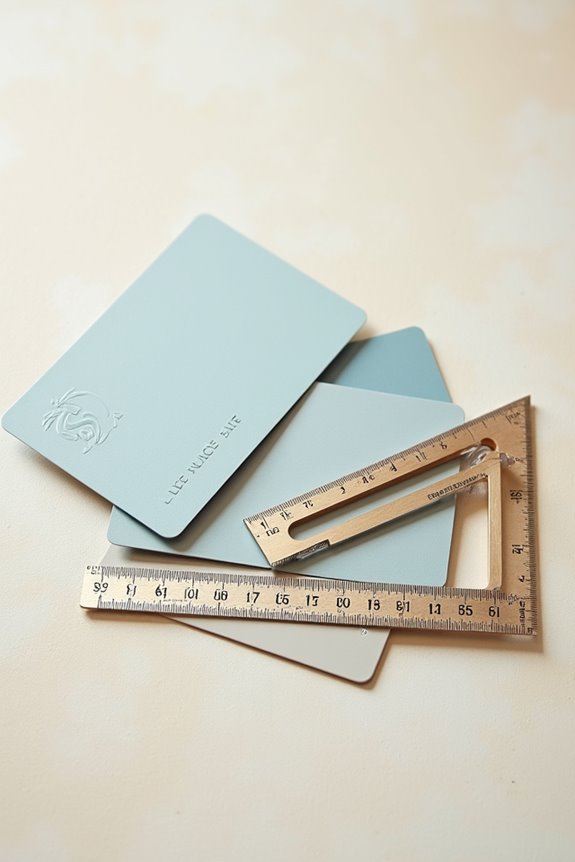
Now that you’ve got your gift card safely mailed, let’s talk about making one that’s actually worth sending. When you’re sourcing custom gift cards, you’ll want to stick with the standard gift card size of 3.375 inches wide by 2.125 inches tall—it’s the format most retailers and recipients expect. Most manufacturers use PVC material, though some brands offer unique variations beyond these dimensions. Here’s what you should know: you can choose your finish and colors using production terms like 4/0 or 4/4 to control branding across sides. I’d recommend designing edge-to-edge artwork with wrap-around designs that maximize your creative vision. Always verify your specific dimensions with your manufacturer though, since compliance requirements and brand variations differ. Getting this right means your gift card looks professional and feels special.